
Between 11 and 14 May, ERGO Network organised an exchange visit to Slovakia, hosted by our national members the Roma Advocacy and Research Centre (RARC), and coordinated by Dr Zuzana Havírová, Chairwoman of RARC and Vice-Chairwoman of ERGO Network. The visit brought together participants from several member organisations for a rich programme of discussions, field visits, and exchanges with local stakeholders working on Roma equality and inclusion.
Kuklov community center: supporting Roma communities at local level
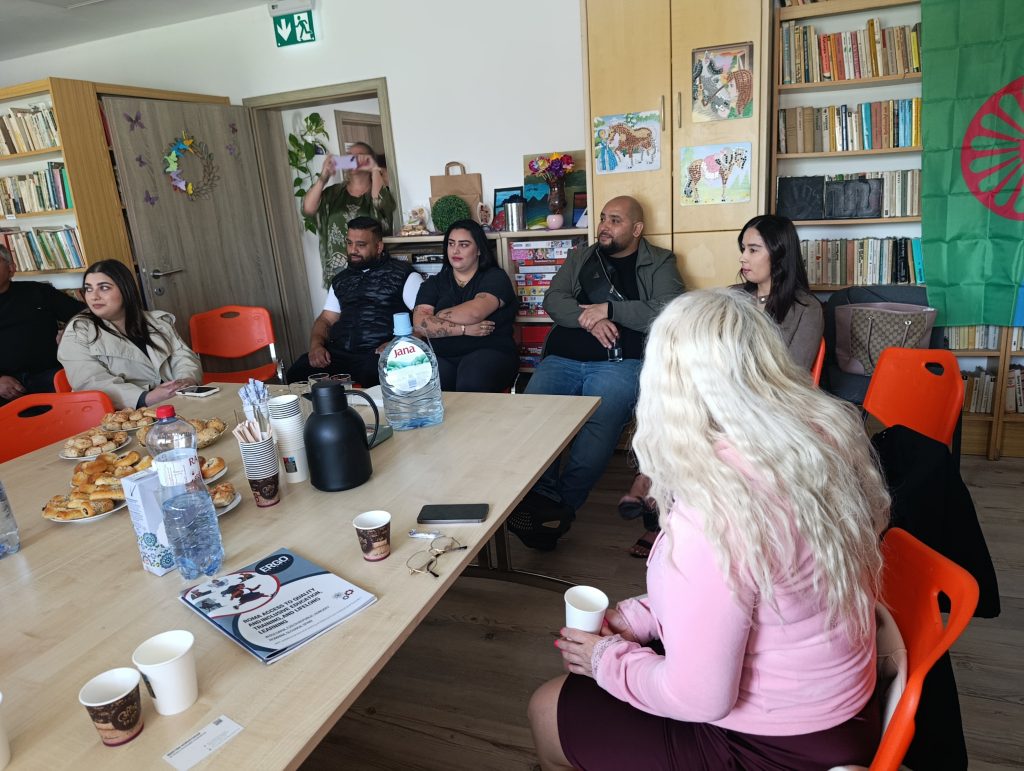
The programme began in Kuklov, a small village in western Slovakia, where participants visited the local community centre and met with its director, Martina Štefancová. The centre provides a wide range of support services to Roma and non-Roma residents alike, including employment support, debt counselling, mediation with schools and healthcare providers, preparatory activities for children, and even a food bank and clothing bazaar.
Participants highlighted the important role of community centres and mediators in addressing exclusion and supporting access to services, particularly in rural areas affected by poverty, poor transport connections, and limited public infrastructure. Participants also exchanged with local Roma residents about everyday realities in the region, including labour market discrimination, over-indebtedness, and access to education.
Cooperation with local authorities and the role of integrated education
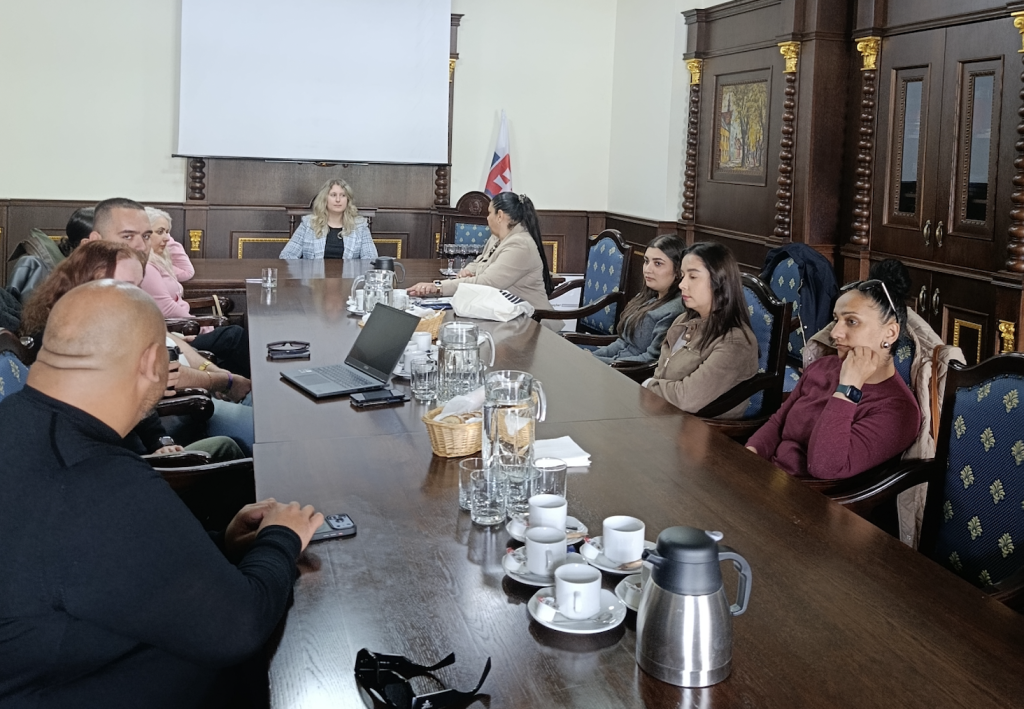
The visit continued in the town of Skalica, where the group met Deputy Mayor Katarína Chovancová to discuss cooperation between local authorities and civil society organisations. Participants learned more about the city’s experience with integrated schooling, social housing, and local support measures for vulnerable residents.
The exchange also highlighted the importance of mainstream education in supporting desegregation and community integration, while underlining the growing financial pressures faced by municipalities and NGOs alike. Discussions further touched on the increasingly hostile environment for civil society organisations in Slovakia and the parallels with broader trends across Europe.
Remembering the victims of the Roma Holocaust in Slovakia
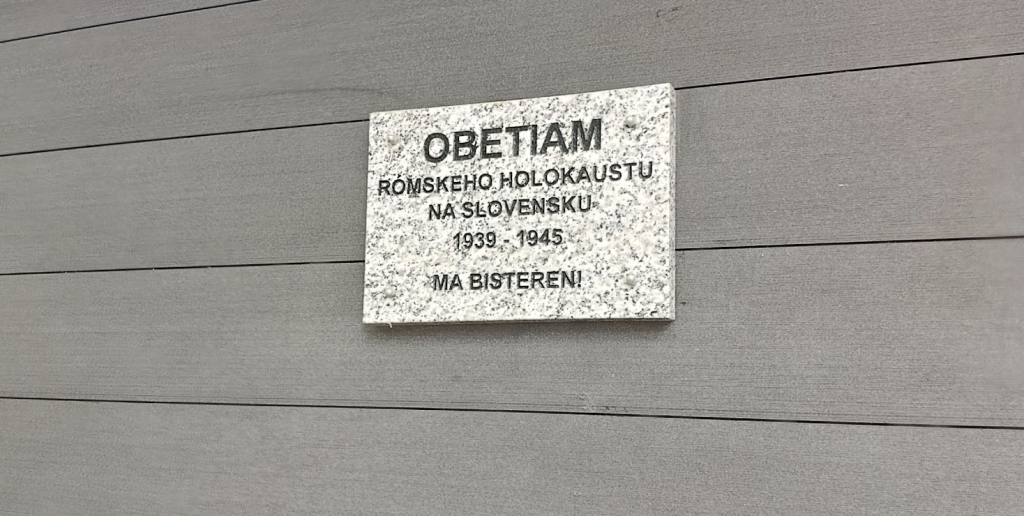
During the visit to Skalica, participants also paid tribute to the victims of the Roma Holocaust at the memorial plaque installed at the local town cemetery. The plaque, unveiled in August 2020 through the efforts of the city together with the Roma Advocacy and Research Centre, commemorates Roma victims of Nazi persecution and wartime atrocities in Slovakia.
Participants gathered together in reflection, laying flowers and candles in remembrance of the hundreds of Roma killed in Slovakia during the Holocaust, as well as the many thousands deported and murdered across Europe. The moment served as an important reminder of the historical roots of antigypsyism and the continued need to preserve memory, dignity, and historical recognition for Roma communities.
Shrinking civic space and solidarity among civil society organisations
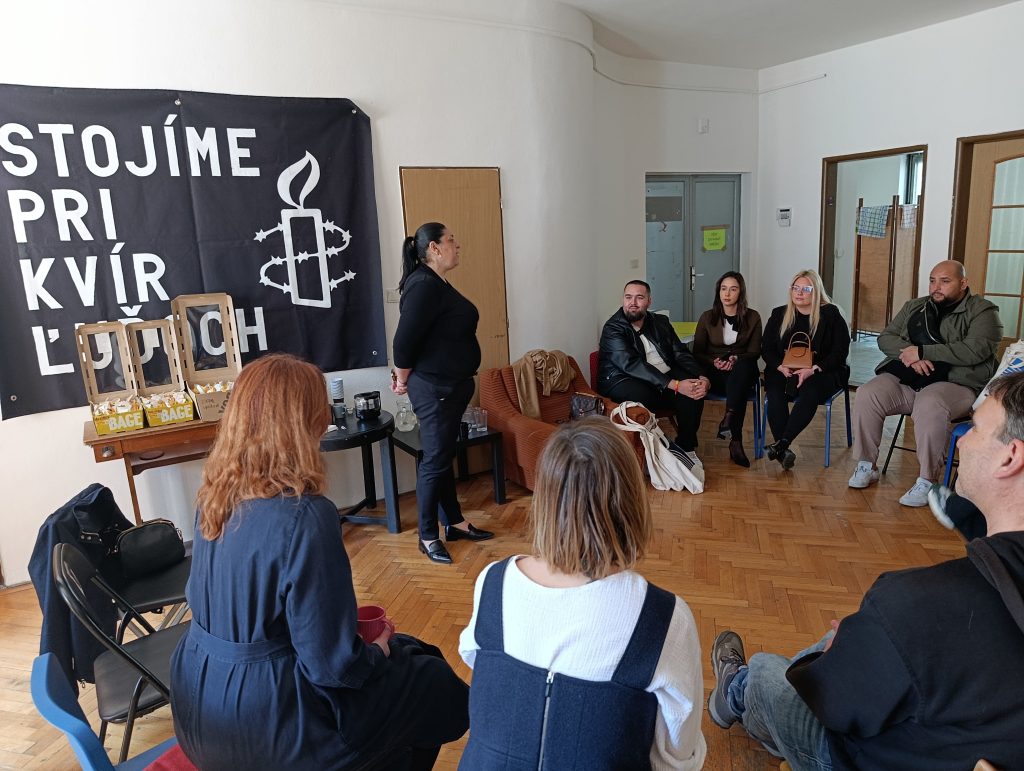
During a meeting hosted by Amnesty International Slovakia, participants learned about the broader human rights NGO coalition it coordinates, bringing together organisations working on human rights, gender equality, and racial justice, including the Roma Advocacy and Research Center. Kamila Gunišová and Peter Vittek from Amnesty International, as well as Monika Kapralíková from InTYMYta shared their experiences of operating in an increasingly polarised political climate.
The exchange covered topics such as antigypsyism, over-policing, segregation in education, exploitation linked to workfare schemes, attacks against NGOs, and the need for stronger solidarity and cooperation across movements. Participants reflected on the broader European context of democratic backsliding, disinformation, and the rise of authoritarian narratives targeting minorities, civil society actors, and human rights defenders.
Exchanges in the Slovak Parliament
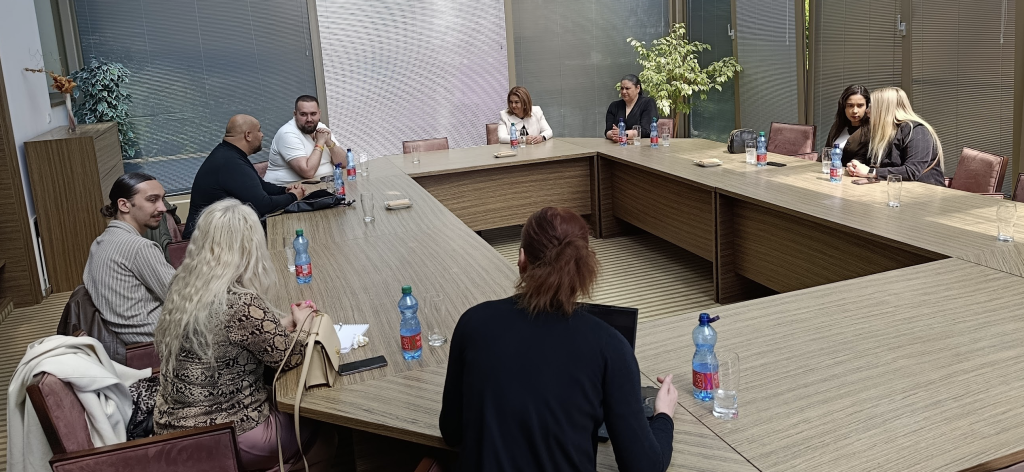
The exchange visit concluded with a meeting in the Slovak Parliament with Member of Parliament Ingrid Kosová. The discussion focused on the implementation gap between commitments on paper and the realities faced by Roma communities in practice. Participants exchanged views on widespread antigypsyism, discrimination in employment and education, the weakening of institutions responsible for Roma inclusion, and the challenges linked to the use of EU funds. Particular attention was paid to the need for integrated approaches combining social investment with infrastructure development, as well as to the importance of meaningful Roma participation in policymaking.
Strengthening cooperation and mutual learning
Beyond the formal meetings, the exchange visit also provided important opportunities for networking, peer learning, and reflection among ERGO Network members. The visit ended with a joint evaluation session over the final dinner, discussing lessons learned and future cooperation. At a time when civic space and democratic participation are increasingly under pressure across Europe, exchanges of this kind remain essential for strengthening solidarity, mutual learning, and joint advocacy among Roma and pro-Roma civil society organisations.
