ERGO Network at the No Hate Speech Week 2026 at the Council of Europe
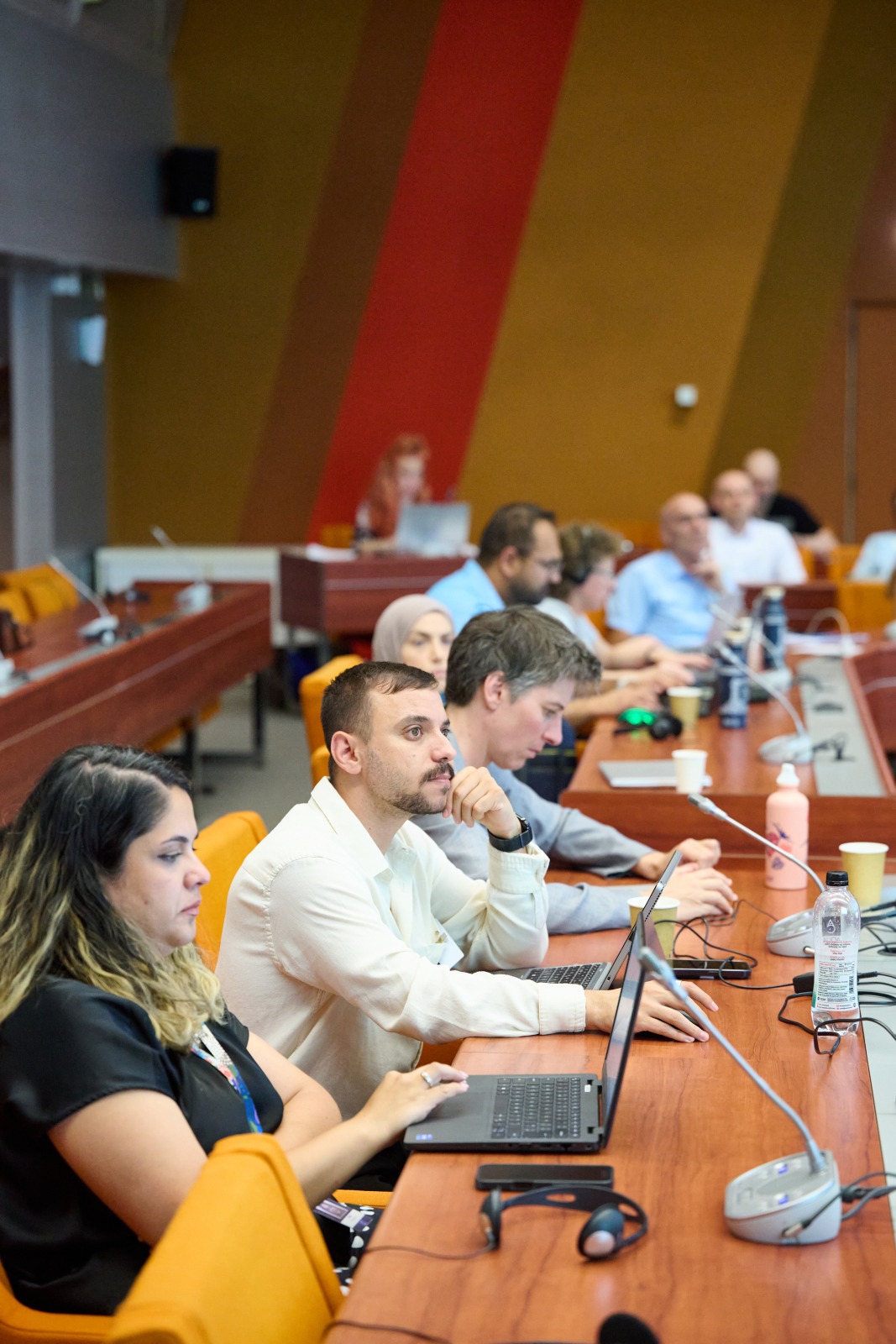
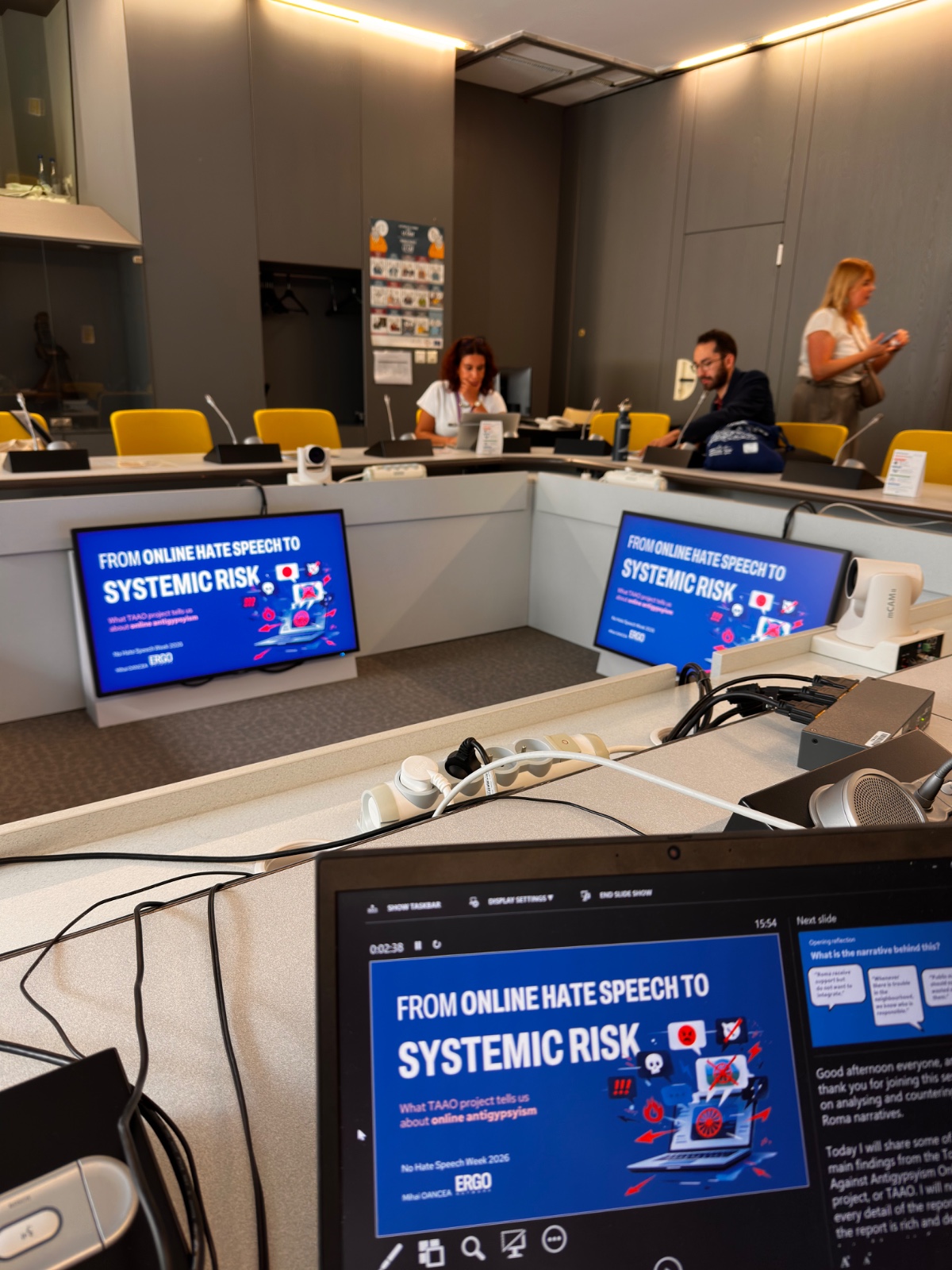
During No Hate Speech Week at the Council of Europe in Strasbourg, ERGO Network presented findings from the Together Against Antigypsyism Online (TAAO) project in a workshop focused on analysing and countering anti-Roma narratives online.
The meeting brought together institutional representatives, civil society organisations, young people and digital rights actors to discuss how hate speech affects democratic participation, and what can be done when online spaces become hostile to the communities they should include.
Online antigypsyism appears in many forms. Sometimes it is direct and violent, but sometimes it hides behind humour, irony, coded language or “just an opinion”. It can appear in a comment section, a meme, a short video, a political statement or the framing of a news story.
Despite these different formats, the message is often the same: Roma do not belong.
Hate speech weakens democratic debate
During the discussions in Strasbourg, Council of Europe Secretary General Alain Berset underlined that social media have become a primary source of information in Europe. This gives digital platforms a serious responsibility, because the spaces where people now form opinions about society are also where harmful narratives can spread quickly and remain visible for long periods.
The Secretary General emphasised that hate speech attacks the basis of democratic debate because it destroys difference and the acceptance of difference.
This point is central to the Roma experience. Online hate does not stay online. It shapes attitudes. It affects trust. It makes visibility feel risky. It also tells young Roma people, activists and community representatives that speaking publicly can come with a cost.
During the Democracy Hackathon debate, one young participant captured this sharply: democracy is weakened not only when people are forbidden to speak, but also when they decide that speaking is no longer worth the cost.
For Roma communities, this is exactly how online antigypsyism becomes a clear obstacle to democratic participation.
ERGO Network’s intervention: from individual posts to systemic risk
In its intervention, TAAO Project Coordinator Mihai Oancea from ERGO Network stressed that online antigypsyism should not be treated only as a series of isolated posts or comments. The problem is broader.
“Anti-Roma hate is built through repetition. The same ideas return again and again across countries, platforms and formats: Roma as criminals, Roma as welfare abusers, Roma as outsiders, Roma as a threat, Roma as collectively responsible for individual actions.”
The narratives themselves are not new, but what has changed is how fast they travel, how easily they are shared, and how normal they can appear in digital spaces.
Mihai Oancea also highlighted that individual reporting cannot be the whole answer.
“Roma users are often encouraged to report hate speech, yet reporting systems frequently fail to deliver meaningful results. This creates a dangerous message. People targeted by hate are asked to carry the burden of reporting, while those spreading hate often face little or no consequence.”
The Digital Services Act creates an important opportunity to address this issue more deeply. Very large online platforms are required to assess and mitigate systemic risks, including risks to fundamental rights and public discourse, and for Roma civil society, this matters.
Online antigypsyism should be recognised as a systemic risk when the same harmful narratives are repeated, amplified, ignored after reporting, or allowed to shape the online spaces where Roma people participate.
The question is no longer only whether a single post breaks a rule. The question is whether platform systems allow anti-Roma hate to circulate, become normalised and remain largely unchallenged.
ERGO Network called for stronger cooperation between institutions, regulators, platforms and Roma civil society. Roma-led monitoring must be supported. Digital Services Coordinators, equality bodies and platforms should create regular spaces where Roma organisations and other minority-led organisations can share what they see, what they report, and what happens afterwards.
Platforms also need better moderation in local languages and specific contexts. Automated systems alone will not understand antigypsyism when it appears through coded references, stereotypes, humour or political dog whistles. Human oversight, cultural knowledge and transparency are essential.
How the TAAO findings support this message
The TAAO synthesis report confirms what Roma communities and Roma civil society organisations have been saying for years: online antigypsyism is not marginal, accidental or isolated.
The project monitored online antigypsyism in Bulgaria, the Czech Republic, Germany, Hungary, Romania and Slovakia over 12 months, from October 2024 to September 2025. Thirty young Roma monitors documented 3,147 cases and contributed to 54 qualitative case studies.
The findings show how anti-Roma hate is built through repetition and normalisation. Across more than 15,000 topic-related instances, neutral mentions were the largest category, followed closely by negative mentions, while positive mentions were significantly lower. The issue is not only the number itself, but the online environment it reflects.
One of the strongest findings concerns reporting. In the qualitative case studies, 40 pieces of content were reported. Only two led to any positive outcome: one received an answer and one led to deletion. The remaining 38 saw no action.
This supports ERGO Network’s main point: reporting systems alone are not enough. Without stronger accountability, better enforcement and recognition of online antigypsyism as a systemic problem, platforms will continue to move too slowly, too inconsistently, or not at all.
The TAAO report should therefore be seen as a starting point for stronger advocacy. It offers evidence, language and concrete findings that institutions and platforms can no longer ignore.
Read the TAAO synthesis report here.
The task ahead
No Hate Speech Week reminded participants that hate relies on fatigue. It relies on people stepping back, losing energy and accepting that nothing will change.
But the responsibility cannot remain only with the communities targeted by hate. Roma communities should not have to prove, again and again, that antigypsyism is real, harmful and dangerous for democracy.
The task now is to make sure the evidence is used, Roma voices are heard, and online antigypsyism is treated as what it is: a clear obstacle to democratic participation and a warning sign for democracy.