ERGO Network meets with the cabinets of European Commission EVP Roxana Mînzatu and Commissioner Hadja Lahbib to discuss antigypsyism, Roma poverty, and EU funding
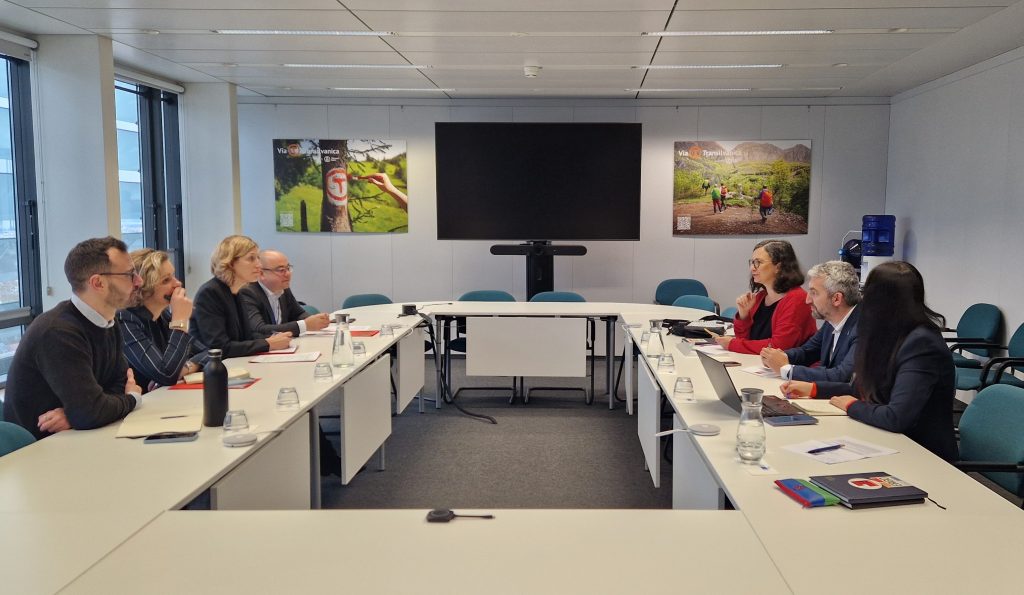
On 27 January 2026, ERGO Network met with high-level representatives of the European Commission to discuss important EU frameworks for the work on Roma inclusion, anti-racism and the next EU budget.
The ERGO Network delegation included Board member Daniel Grebeldinger (Nevo Parudimos, Romania), Director Gabriela Hrabaňová, and staff members Amana Ferro (Senior Policy Adviser) and Isabela Mihalache (Senior Advocacy Officer). From the European Commission side, the meeting was attended by Eva Schultz, Sonia Vila Núñez and Cătălin Gheran from the cabinet of EVP Mînzatu and Francesco Zoia Bolzonello from the cabinet of Commissioner Lahbib.
The exchange focused on how EU commitments on equality, social rights and poverty reduction can be better translated into concrete impact for Roma communities across Europe. ERGO Network presented evidence from its grassroots members highlighting persistent antigypsyism as the main structural barrier to Roma inclusion, and stressed the need to move from political recognition to enforceable implementation in the context of the EU Roma Strategic Framework, the new Anti-Racism Strategy, and the Union of Equality more broadly.
ERGO Network also shared key messages on the European Semester, the European Pillar of Social Rights, the upcoming EU Anti-Poverty Strategy and the Child Guarantee, underlining that Roma poverty remains widespread and intergenerational. Anti-poverty efforts will not reach the most excluded if intersectional discrimination is not addressed as a root cause. Meaningful and resourced participation of Roma civil society in the design, implementation and monitoring is paramount for ownership and evidence-based solutions.
EU funding and the next Multiannual Financial Framework were another central topic of the discussion. Drawing on concrete experience from Romania, Daniel Grebeldinger highlighted how EU funds often fail to reach Roma communities in practice, due to restrictive calls, limited access for NGOs and weak local implementation. He shared lessons from community-led local development (CLLD), desegregation efforts and projects supporting decent housing in Reșița, illustrating how inclusive, community-based approaches can deliver results when funding frameworks allow for real participation of the target communities.
Throughout the exchange, ERGO Network emphasised that Roma civil society is not only a stakeholder, but a partner in delivery. The network reiterated its readiness to support the European Commission and Member States with evidence, grassroots expertise and community-led monitoring tools, to ensure that competitiveness objectives go hand in hand with equality, dignity, and fundamental rights.
ERGO Network will continue to engage with the EU institutions in the coming months, including in the context of Roma Week 2026, to push for policies and funding frameworks that deliver social justice for all, including Europe’s Roma.
For more information about this meeting, please contact Senior Policy Adviser Amana Ferro – a.ferro@ergonetwork.org
